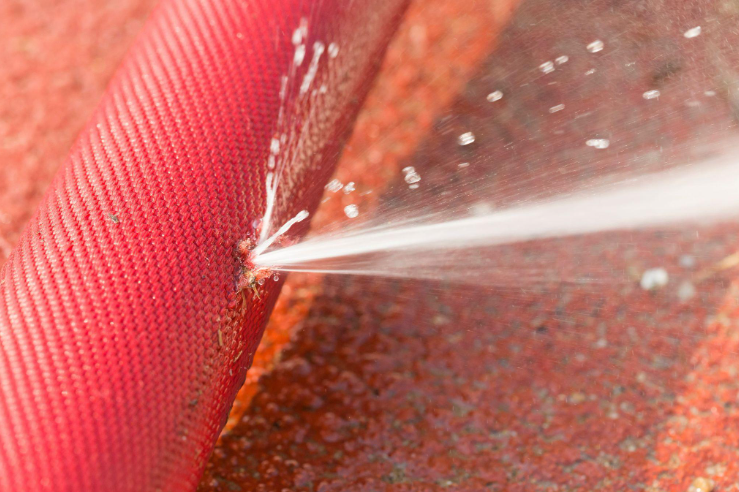
Discharge hoses are essential components in industries where fluids, slurries or abrasive materials must be transported safely and efficiently. They are widely used in mining, dredging, construction, wastewater management, marine engineering and numerous industrial processes. Although these systems are designed to withstand demanding operating conditions, discharge hoses are continuously exposed to mechanical stress, fluctuating pressures and harsh environmental influences that can gradually reduce their performance.
Unexpected hose failures can interrupt production, increase maintenance costs and create safety risks for personnel and equipment. As industrial operations become more complex and operating hours continue to increase, preventing hose failure has become an important engineering objective. Modern hose design therefore focuses not only on achieving high pressure ratings but also on improving durability throughout the entire service life.
Abrasion Remains the Primary Cause of Wear
Among all factors affecting discharge hose longevity, abrasion is often the most significant. Many industrial applications involve transporting mixtures containing sand, gravel, crushed rock, mineral concentrates or other solid particles. These materials continuously interact with the hose lining, gradually removing material through friction and impact.
The severity of abrasion depends on several variables. Particle size, particle shape, flow velocity and the concentration of solids all influence wear rates. Sharp, angular particles generally create far greater damage than smooth or rounded materials, while higher transport velocities increase the energy with which particles strike the hose wall.
Engineers reduce abrasion through careful material selection. Natural rubber compounds, synthetic elastomers and specialised wear-resistant thermoplastics are commonly chosen according to the specific characteristics of the transported medium. In particularly demanding applications, multilayer hose constructions provide additional protection by combining highly abrasion-resistant inner linings with flexible structural reinforcement.
Pressure Surges Can Significantly Reduce Service Life
Pressure fluctuations represent another major challenge for discharge hose systems. Sudden changes in flow velocity, rapid valve closures or pump start-up sequences may generate pressure surges that exceed normal operating conditions. These transient loads, often referred to as water hammer effects, place considerable stress on both the hose structure and its connection points.
Repeated exposure to pressure spikes accelerates material fatigue and increases the likelihood of reinforcement damage over time. Even when individual surges remain below the hose’s maximum pressure rating, continuous cyclic loading may shorten service life considerably.
Modern system design seeks to minimise these effects through controlled pump operation, pressure relief systems and carefully planned pipeline layouts. Engineers increasingly analyse complete fluid transfer systems rather than evaluating hose performance in isolation.
Fatigue Develops Gradually
Unlike sudden mechanical damage, fatigue usually develops slowly over extended periods of operation. Every pressure cycle, vibration or bending movement contributes to microscopic structural changes within the hose materials. Eventually these repeated stresses may lead to cracks, reinforcement separation or reduced flexibility.
Dynamic applications are particularly susceptible to fatigue. Hoses connected to mobile equipment, floating dredging systems or vibrating pumps experience continuous movement throughout their operating life. If bending repeatedly occurs at the same location, local stress concentrations may accelerate structural deterioration.
Proper hose routing plays an important role in reducing fatigue. Allowing sufficient bending radius, avoiding unnecessary twisting and providing adequate support all help distribute mechanical loads more evenly across the hose assembly.
Installation Quality Has a Lasting Impact
Even a high-quality discharge hose may experience premature failure if installed incorrectly. Installation errors often remain unnoticed during commissioning but become increasingly significant as the system enters long-term operation.
One common issue is excessive bending immediately behind couplings or flanges. This creates concentrated stress at precisely the location where structural loads are already highest. Incorrect alignment between pipeline components may introduce constant torsional forces that gradually weaken reinforcement layers.
Insufficient support is another frequent concern, particularly in long hose runs. Excessive sagging increases mechanical loading and may create additional abrasion where hoses come into contact with surrounding structures or the ground.
Engineers therefore consider installation as an integral part of system performance rather than a separate construction activity. Detailed installation guidelines and proper training contribute significantly to extending operational life.
Preventive Maintenance Reduces Unplanned Downtime
Maintenance strategies have shifted considerably in recent years. Rather than replacing hoses only after visible damage appears, many industrial operators now rely on preventive inspection programmes designed to identify wear before failures occur.
Routine visual inspections can reveal early indications of external abrasion, cuts, deformation or coupling movement. Internal inspections, pressure testing and dimensional measurements provide additional information regarding the condition of the hose lining and reinforcement.
Documenting inspection results allows maintenance teams to monitor deterioration over time instead of relying solely on fixed replacement intervals. This approach supports more efficient maintenance planning while reducing unnecessary component replacement.
Digital asset management systems increasingly assist these processes by recording operational history, inspection schedules and performance data for individual hose assemblies.
Material Science Continues to Improve Performance
The evolution of hose technology has been strongly influenced by advances in material science. New elastomer formulations provide greater resistance against abrasion while maintaining flexibility under demanding operating conditions. Composite reinforcement fibres offer high tensile strength with reduced weight, simplifying installation and handling.
Thermoplastic materials are also expanding the range of available solutions. Depending on the application, they may offer improved chemical resistance, smoother internal surfaces and enhanced dimensional stability compared with conventional rubber compounds.
Hybrid hose constructions combining different material technologies have become increasingly common. Each layer can be optimised for a specific purpose, whether abrasion resistance, pressure containment, flexibility or environmental protection.
Manufacturers throughout the industry continue to invest in these developments. The German hose producer PARSCH, for example, is among the companies working in specialised industrial hose applications where long service life and reliable performance under demanding operating conditions are key engineering objectives.
Lifecycle Optimisation Is Becoming a Strategic Priority
Industrial operators increasingly evaluate discharge hoses based on total lifecycle performance rather than initial purchase costs alone. While a hose with higher wear resistance may involve greater upfront investment, longer service intervals and reduced downtime often improve overall economic efficiency.
Lifecycle optimisation begins during system design. Selecting the appropriate hose construction for the transported medium, anticipated pressure cycles and environmental conditions helps minimise premature wear. Proper installation, regular inspection and data-driven maintenance further extend operational life while reducing unexpected failures.
Digital monitoring technologies are expected to play a growing role in this process. Sensors capable of measuring pressure, deformation or vibration may eventually provide continuous insight into hose condition, allowing maintenance teams to intervene before damage develops into critical failures.
Engineering Reliability Through Continuous Improvement
Discharge hose failures rarely result from a single isolated cause. Abrasion, pressure fluctuations, fatigue, installation practices and maintenance quality interact throughout the operational life of every hose system. Understanding these relationships allows engineers to develop more resilient fluid transfer solutions capable of performing reliably under increasingly demanding industrial conditions.
Ongoing advances in materials, reinforcement technologies, predictive maintenance and system engineering continue to improve the durability of modern discharge hoses. As industries seek greater operational efficiency and reduced lifecycle costs, engineering approaches that integrate design, installation and maintenance are becoming essential for achieving long-term reliability in abrasive and high-performance fluid transfer applications.